K-Pop US Tour Revenue: 2026 Projections & Growth Analysis

Anúncios
Analyzing K-Pop’s US Tour Revenue: How 2026 Projections Show a 15% Increase Over Last Year
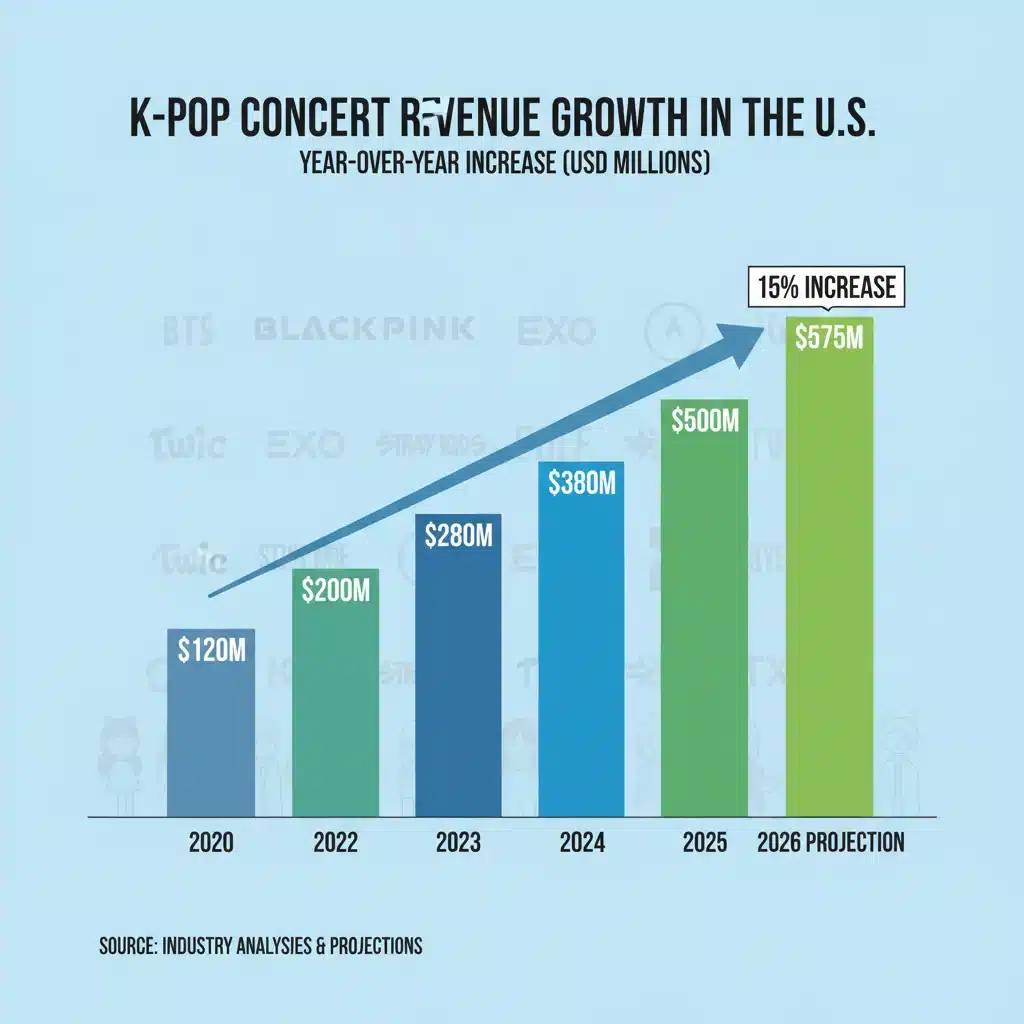
The global music landscape is constantly evolving, and few genres exemplify this dynamic shift as profoundly as K-Pop. Originating from South Korea, K-Pop has transcended cultural and linguistic barriers to establish a formidable presence worldwide, with the United States emerging as a pivotal market. The burgeoning popularity of K-Pop groups and solo artists in the US has translated into significant financial gains, particularly in the live concert sector. Our analysis delves into the remarkable trajectory of K-Pop US Revenue from touring, with compelling 2026 projections indicating an impressive 15% increase over the previous year. This article will explore the multifaceted factors contributing to this growth, the economic implications, and what the future holds for K-Pop in the American market.
The Unstoppable Rise of K-Pop in the US Market
K-Pop’s journey from a niche genre to a mainstream phenomenon in the United States is a testament to its unique blend of catchy melodies, intricate choreography, compelling visuals, and highly engaged fandoms. What began with pioneering acts slowly gaining traction has now blossomed into a full-fledged cultural movement, attracting millions of dedicated fans across diverse demographics. This surge in popularity is not merely anecdotal; it is reflected in tangible metrics, most notably in the rapidly escalating K-Pop US Revenue generated from live tours.
Anúncios
Historically, American tours for Asian artists were often limited to smaller venues and specific ethnic communities. However, K-Pop has shattered these limitations, consistently selling out iconic arenas and stadiums nationwide. Groups like BTS, BLACKPINK, Stray Kids, TXT, and TWICE, among many others, have proven their immense drawing power, turning their US tours into highly anticipated cultural events. This mainstream acceptance is a critical driver for the projected revenue increase.
Key Factors Fueling K-Pop’s US Expansion
Several interconnected factors contribute to the sustained growth of K-Pop US Revenue:
- Dedicated Fandoms: K-Pop boasts some of the most organized and passionate fanbases in the world. These fans, often referred to as ‘stans,’ are not just passive consumers; they are active participants in promoting their favorite groups, streaming music, buying merchandise, and, crucially, attending concerts. Their collective power ensures high ticket sales and repeat attendance.
- Social Media Mastery: K-Pop agencies and artists have expertly leveraged social media platforms to connect directly with fans globally. This direct communication fosters a sense of intimacy and community, turning casual listeners into devoted followers eager to experience live performances. Viral challenges, behind-the-scenes content, and interactive fan events online translate directly into offline engagement and ticket purchases.
- High Production Value: K-Pop concerts are renowned for their spectacular production value. Elaborate stage designs, stunning visual effects, live bands, and perfectly synchronized choreography create an immersive and unforgettable experience for attendees. This commitment to quality justifies higher ticket prices and enhances the overall value proposition for fans.
- Strategic Marketing and Partnerships: K-Pop labels have become increasingly sophisticated in their marketing strategies for the US market. This includes collaborations with Western artists, appearances on major American television shows, and strategic partnerships with concert promoters and brands that understand the nuances of the American entertainment industry.
- Accessibility and Diversity: While South Korea remains the epicenter, K-Pop’s global appeal means its themes and music often resonate universally. The increasing diversity of K-Pop groups themselves, both in terms of members and musical styles, broadens its appeal to an even wider audience in the multicultural US.
Understanding the 2026 K-Pop US Revenue Projections
The projection of a 15% increase in K-Pop US Revenue from touring in 2026 over the previous year is a significant indicator of the genre’s enduring strength and growth potential. This figure is not arbitrary; it is based on a comprehensive analysis of various economic and market indicators.
Methodology for Projections
To arrive at such a projection, analysts consider:
Anúncios
- Historical Revenue Data: Examining past tour revenues, ticket sales, and merchandise figures provides a baseline for growth trends. The consistent upward trajectory of K-Pop concert earnings in the US over the past few years is a strong foundation.
- Artist Activity and Debut Schedules: A robust pipeline of new K-Pop groups debuting and established groups planning world tours, including significant US legs, directly impacts future revenue. The increasing number of groups capable of filling large venues is a key factor.
- Ticket Pricing and Demand: Analysts monitor average ticket prices and the elasticity of demand. As K-Pop’s popularity grows, so does the willingness of fans to pay premium prices for highly sought-after tickets, VIP packages, and exclusive experiences.
- Venue Availability and Expansion: The increasing availability of suitable large-scale venues and the willingness of promoters to book multiple dates in major cities reflect confidence in K-Pop’s drawing power.
- Economic Indicators: Broader economic health, consumer spending habits, and disposable income levels influence concert attendance. Despite economic fluctuations, the dedicated nature of K-Pop fandom often shows resilience in spending.
- Merchandise and Ancillary Sales: Beyond ticket sales, significant revenue comes from official merchandise, lightsticks, fan kits, and other concert-related purchases. These often represent a substantial portion of overall tour earnings.
The Impact of Increased Tours and Artist Diversity
The 15% increase projected for 2026 is also a reflection of the growing number of K-Pop acts successfully touring the US. While a few mega-groups initially dominated the market, now a broader array of groups, from established veterans to rising rookies, are finding success. This diversification means more touring opportunities, more concerts, and ultimately, greater overall K-Pop US Revenue. Fans have a wider selection of artists to support, leading to a more robust and expansive concert market.
Economic Implications of K-Pop’s US Success
The significant growth in K-Pop US Revenue has far-reaching economic implications, not just for the music industry but for related sectors as well.
Direct Economic Impact
- Concert Promoters and Venues: Live Nation, AEG Presents, and other major promoters are increasingly investing in K-Pop tours, recognizing their profitability. Venues benefit from rental fees, concession sales, and staffing requirements.
- Travel and Hospitality: Fans often travel across states or even internationally to attend K-Pop concerts, boosting local economies through hotel bookings, restaurant spending, and transportation services.
- Merchandise and Retail: Official merchandise sales are a huge component of tour revenue, but K-Pop also stimulates unofficial fan merchandise, boosting small businesses and independent artists.
- Job Creation: From stagehands and security to marketing teams and tour managers, K-Pop tours create numerous temporary and permanent job opportunities.
Indirect Cultural and Soft Power Impact
Beyond direct financial gains, K-Pop’s success in the US contributes to South Korea’s ‘soft power.’ This cultural influence can lead to increased interest in Korean language, food, fashion, and tourism, creating a positive feedback loop that further strengthens the genre’s appeal and, indirectly, its economic footprint.
Challenges and Opportunities for Sustained Growth
While the 2026 projections for K-Pop US Revenue are overwhelmingly positive, the industry is not without its challenges. However, these challenges also present significant opportunities for strategic growth.
Navigating the Competitive Landscape
The US music market is highly competitive. K-Pop artists must continually innovate and differentiate themselves to maintain relevance amidst a vast array of domestic and international acts. This includes evolving musical styles, engaging content, and maintaining strong fan connections.
Logistical Complexities of Touring
Touring, especially internationally, is logistically complex and expensive. Visa issues, travel costs, and managing large production teams across multiple cities require meticulous planning. Streamlining these processes can enhance profitability.
Opportunities for Digital Expansion and Hybrid Events
The pandemic accelerated the adoption of digital concerts and hybrid events. While live tours are back, integrating digital elements – such as exclusive online content, virtual fan meets, or enhanced live streams – can create additional revenue streams and extend reach beyond physical attendees, further boosting overall K-Pop US Revenue.
Deepening Localized Engagement
Further localization of content and marketing efforts can help K-Pop artists resonate even more deeply with American audiences. This could involve more English-language releases, collaborations with US artists, and participation in American cultural events beyond just concerts.
The Role of Fan Engagement in K-Pop US Revenue Growth
It’s impossible to discuss the growth of K-Pop US Revenue without emphasizing the paramount role of its fanbases. Unlike traditional music consumption, K-Pop fandom is highly interactive and communal. Fans don’t just listen; they participate, organize, and mobilize.
Fandom as a Driving Force
- Pre-sales and Fan Club Benefits: Many K-Pop tours offer fan club pre-sales, incentivizing membership and guaranteeing a strong initial surge in ticket sales. This structured fan engagement ensures a loyal audience for tours.
- Social Media Campaigns: Fan groups actively run campaigns to promote tours, stream music, and create buzz around upcoming concerts, acting as an unpaid marketing army.
- Community Building: K-Pop fosters strong online and offline communities. Fans often travel together, organize meet-ups, and create shared experiences around concerts, enhancing the overall value of attending.
- Merchandise Culture: The unique culture of K-Pop merchandise, particularly lightsticks that synchronize with concert lighting, creates a visually stunning and unifying experience that encourages purchases and participation.

This level of dedication ensures that when K-Pop groups announce US tours, the demand is almost guaranteed, forming a solid foundation for the projected revenue increases. The emotional investment fans have in their idols translates directly into economic support, making them indispensable to the genre’s commercial success.
Future Outlook: Beyond 2026 for K-Pop in the US
Looking beyond the 2026 projection, the future of K-Pop US Revenue appears bright and poised for continued expansion. The foundational elements for sustained growth are firmly in place, and the industry is adapting to new trends and opportunities.
Emerging Trends to Watch
- Virtual Idols and AI Integration: The rise of virtual K-Pop idols and the increasing integration of AI in music production and fan interaction could open new avenues for revenue and engagement, blending digital and physical experiences.
- Expansion into Tier 2 Cities: As the market matures, tours might expand beyond major metropolitan areas into smaller, but still significant, cities, tapping into new fan bases and increasing overall reach and revenue.
- Festival Integration: K-Pop artists are increasingly being featured in major US music festivals, exposing them to broader audiences and potentially converting new fans who then seek out their solo tours.
- Sustainability in Touring: As environmental concerns grow, artists and agencies may explore more sustainable touring practices, which, while potentially impacting initial costs, could resonate positively with environmentally conscious fans.
The Long-Term Vision
The long-term vision for K-Pop in the US involves not just maintaining its current momentum but integrating more deeply into the fabric of American popular culture. This means more consistent presence on US charts, wider media coverage, and continued collaboration across genres. The 15% projected increase in K-Pop US Revenue for 2026 is not just a number; it’s a strong affirmation of a cultural phenomenon that has firmly cemented its place in the American entertainment landscape.
The dedication of artists, the strategic acumen of agencies, and the unparalleled passion of K-Pop fans collectively ensure that the genre’s economic impact in the United States will only continue to grow. As we move closer to 2026, all indicators point towards a vibrant, expanding, and increasingly influential K-Pop market in the US, making it a crucial territory for the global music industry.
Conclusion
The analysis of K-Pop US Revenue projections for 2026 reveals a robust and rapidly expanding market. With an anticipated 15% increase over the previous year, K-Pop tours are not just selling tickets; they are creating significant economic value and cultural impact across the United States. This growth is driven by a potent combination of highly engaged fanbases, sophisticated marketing strategies, exceptional production quality, and the increasing diversity of K-Pop acts. As the genre continues to evolve and innovate, its footprint in the American music industry is set to become even more pronounced, solidifying its position as a major player on the global stage. The future looks incredibly promising for K-Pop in the US, promising more spectacular tours, deeper fan connections, and continued financial success.