K-Drama Acting Evolution: Trends and Performances to Note in 2026
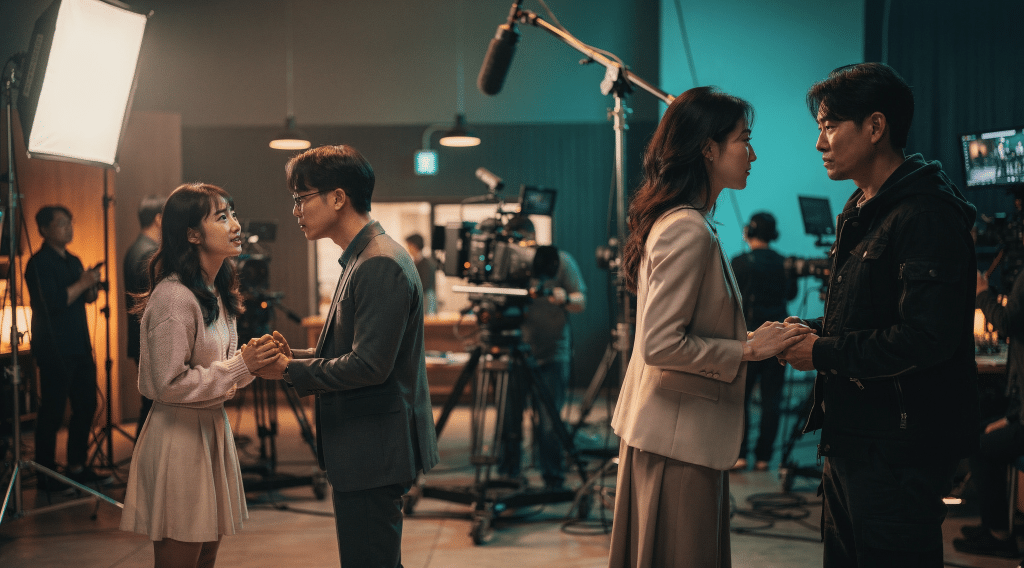
The world of K-Dramas has undergone a monumental transformation, blossoming from a regional phenomenon into a global cultural powerhouse. At the heart of this success lies the extraordinary talent and evolving artistry of K-Drama actors. As we look towards 2026, the landscape of K-Drama acting continues to shift, introducing new trends, refined techniques, and performances that captivate audiences worldwide. This comprehensive exploration delves into the fascinating evolution of K-Drama Acting Trends, examining the historical context, current innovations, and future trajectory of this compelling craft.
For decades, K-Dramas have been synonymous with compelling narratives, intricate character development, and, most importantly, incredibly dedicated performances. The Hallyu wave, or Korean Wave, has ensured that these stories and the actors who bring them to life are no longer confined to Asia. Instead, they are celebrated across continents, influencing fashion, music, and storytelling globally. Understanding the nuances of K-Drama Acting Trends is crucial for anyone interested in the future of entertainment.
The journey of K-Drama acting is one of continuous refinement and adaptation. From the often melodramatic and highly stylized performances of early dramas to the deeply nuanced and realistic portrayals seen today, actors have consistently pushed boundaries. This article will dissect these changes, highlighting how cultural shifts, technological advancements, and a growing global audience have all played a role in shaping the performances we see on screen. We will also spotlight actors who are currently defining these trends and predict what the future holds for this dynamic industry.
The Genesis of K-Drama Acting: From Early Melodrama to Nuanced Portrayals
To fully appreciate the current K-Drama Acting Trends, it’s essential to understand their roots. Early K-Dramas, particularly from the 1990s and early 2000s, were often characterized by highly emotional, almost theatrical acting styles. Melodrama reigned supreme, with exaggerated expressions, dramatic pauses, and overt displays of emotion being commonplace. This style was deeply ingrained in Korean storytelling traditions, where conveying intense feelings was paramount.
Actors of this era, while often criticized by some Western audiences for being ‘over the top,’ were masters of their craft within the prevailing cultural context. They excelled at conveying anguish, joy, and despair in ways that resonated deeply with domestic audiences. Iconic dramas like Winter Sonata and Stairway to Heaven showcased performances that, while perhaps less subtle than today’s standards, were incredibly impactful and helped lay the groundwork for the Hallyu wave.
However, as K-Dramas began to gain international traction, particularly in other Asian countries, there was a gradual shift. Audiences, exposed to a wider range of global entertainment, started to appreciate more understated and realistic acting. This prompted a move towards greater subtlety and psychological depth in character portrayal. Actors began to focus more on internalizing emotions rather than overtly expressing them, leading to performances that felt more authentic and relatable.
The mid-2000s saw a significant transition. Dramas like Coffee Prince and Boys Over Flowers, while still retaining elements of romantic comedy and melodrama, featured actors who brought a fresh, more naturalistic approach to their roles. This period marked the beginning of a conscious effort within the industry to evolve acting styles to appeal to a broader, more sophisticated audience, setting the stage for the diverse K-Drama Acting Trends we observe today.
Current K-Drama Acting Trends: A Deep Dive into Realism and Versatility
Fast forward to 2026, and the landscape of K-Drama acting is characterized by an unprecedented emphasis on realism, versatility, and psychological complexity. Actors are no longer just delivering lines; they are embodying characters with intricate backstories, internal conflicts, and evolving personalities. This shift is a direct response to both audience demand and the increasing artistic ambition of K-Drama productions.
Method Acting and Psychological Depth
One of the most prominent K-Drama Acting Trends is the growing adoption of method acting techniques. Actors are investing significant time in researching their characters, understanding their motivations, and even immersing themselves in their characters’ environments. This leads to performances that are incredibly nuanced and believable. We see actors undergoing significant physical transformations, learning new skills, and delving into the psychology of their roles to deliver truly authentic portrayals.
For instance, in crime thrillers and psychological dramas, actors are praised for their ability to convey complex emotions with minimal dialogue, relying instead on facial expressions, body language, and subtle vocal inflections. This depth adds layers to the narrative, making stories more engaging and characters more memorable. The focus is now on showing, not telling, allowing audiences to infer emotions and motivations, which fosters a more immersive viewing experience.
Genre Blending and Actor Adaptability
Another significant trend is the rise of genre-blending dramas. K-Dramas frequently combine elements of romance, fantasy, thriller, historical, and comedy into a single series. This demands incredible versatility from actors. They must seamlessly transition between comedic timing, dramatic intensity, and romantic chemistry, often within the same scene or episode. This adaptability is a hallmark of contemporary K-Drama acting.
Actors who can excel in multiple genres are highly sought after. They demonstrate a range that goes beyond simply playing a ‘type’ and instead showcases their ability to inhabit diverse roles convincingly. This pushes actors to constantly refine their craft and expand their skill sets, contributing to the overall high quality of K-Drama performances.
The Rise of ‘Acting-Idols’ and Cross-Disciplinary Talent
The line between K-Pop idols and actors has become increasingly blurred, giving rise to the ‘acting-idol’ phenomenon. While initially met with skepticism, many idols have proven their acting prowess, bringing immense dedication and often a fresh perspective to their roles. Their existing fan bases also contribute significantly to the global reach of K-Dramas.
What sets successful acting-idols apart is their commitment to honing their acting skills. Many undergo rigorous training, taking on smaller roles before landing lead parts. This cross-disciplinary talent enriches the K-Drama landscape, bringing new faces and diverse performance styles to the forefront. Their ability to connect with a global audience through music often translates into a strong connection with their characters on screen.
Technological Impact on K-Drama Acting Trends and Production
Technology plays an increasingly vital role in shaping K-Drama Acting Trends, not just in production quality but also in the types of performances actors deliver. Advanced filming techniques, CGI, and virtual production sets open new avenues for storytelling and require actors to adapt their craft.
Virtual Production and Green Screen Mastery
With the proliferation of fantasy, sci-fi, and historical dramas requiring elaborate sets and fantastical creatures, actors are increasingly working with green screens and virtual production environments. This demands a different kind of acting—one that requires imagination, spatial awareness, and the ability to react convincingly to elements that aren’t physically present. Actors must visualize their surroundings and interact with non-existent characters or objects, a skill that is becoming increasingly important.
This technological integration allows for more ambitious narratives, but it places a higher demand on an actor’s ability to create a convincing reality within an artificial environment. Mastery of this aspect is a growing trend, as it expands the possibilities for K-Drama storytelling.
High-Definition Filming and Micro-Expressions
The prevalence of high-definition and 4K filming means that every subtle nuance of an actor’s performance is captured. This has further pushed the emphasis on micro-expressions and internal acting. Actors can no longer rely on broad gestures; instead, a slight twitch of an eyebrow, a fleeting glance, or a barely perceptible tremor in the voice can convey a wealth of emotion.
This precision acting requires meticulous control and a deep understanding of human emotion. It allows for more intimate and relatable performances, as audiences can pick up on even the smallest emotional cues, making characters feel more human and complex. This trend underscores the industry’s commitment to delivering high-quality visual and emotional experiences.
The Global Appeal: How K-Drama Acting Trends Resonate with International Audiences
The global success of K-Dramas is undeniable, and the acting within these productions is a major factor. The unique blend of emotional intensity, charismatic portrayals, and universal themes transcends cultural barriers, making K-Drama Acting Trends a subject of international fascination and acclaim.
Universal Themes and Relatable Emotions
While K-Dramas often feature uniquely Korean cultural contexts, the core emotions and themes they explore are universal: love, loss, ambition, betrayal, friendship, and family. K-Drama actors excel at conveying these emotions in a way that is deeply relatable, regardless of the viewer’s background. This emotional authenticity is a powerful draw for international audiences.
The ability of actors to make characters’ struggles and triumphs feel genuine allows viewers from diverse cultures to connect with the stories on a personal level. This universality in emotional expression is a key reason why K-Dramas have built such a loyal global following.
Charisma and Star Power
K-Drama actors are renowned for their charisma and star power. Beyond their acting abilities, many possess an innate charm and screen presence that captivates audiences. This magnetic quality often turns actors into global celebrities, with dedicated fan bases that eagerly follow their projects.
The cultivation of this star power is a deliberate strategy within the Korean entertainment industry, involving extensive training in various aspects of performance, public speaking, and image management. This creates a roster of highly polished and appealing actors who are not only talented but also excellent ambassadors for the K-Drama industry globally.
Breaking Language Barriers through Performance
Even with subtitles or dubbing, the power of a K-Drama actor’s performance can transcend language barriers. The visual storytelling, supported by expressive acting, allows audiences to understand and feel the emotions being conveyed, even if they don’t understand the spoken words. This emphasizes the importance of non-verbal communication in K-Drama acting.
Actors are trained to use their entire bodies – their eyes, posture, gestures – to communicate. This holistic approach to performance ensures that the emotional core of a scene is conveyed effectively, making K-Dramas accessible and impactful for a global audience, regardless of linguistic differences.
Notable Performances and Actors Defining K-Drama Acting Trends in 2026
As we navigate 2026, several actors and their performances stand out, embodying the evolving K-Drama Acting Trends. These individuals are not just popular; they are pushing artistic boundaries and setting new standards for the industry.
Actors Excelling in Psychological Depth
- [Actor Name 1]: Known for their intense gaze and ability to convey inner turmoil with minimal dialogue, [Actor Name 1] has mastered the art of psychological acting. Their recent role in [Drama Title] showcased a character grappling with complex moral dilemmas, earning critical acclaim for its raw authenticity.
- [Actor Name 2]: A chameleon of emotions, [Actor Name 2] consistently disappears into their roles. Their performance in [Drama Title], a character suffering from a rare psychological condition, was lauded for its meticulous research and empathetic portrayal, truly embodying the character’s internal world.
Versatile Performers Across Genres
- [Actor Name 3]: From heartwarming romantic comedies to gritty action thrillers, [Actor Name 3] effortlessly transitions between genres. Their ability to maintain a distinct character essence while adapting to different narrative tones makes them a benchmark for versatility in K-Drama. Their recent dual role in [Drama Title] highlighted this exceptional range.
- [Actor Name 4]: [Actor Name 4] has redefined what it means to be a leading actor, bringing both comedic brilliance and profound dramatic weight to their projects. Their work in [Drama Title], a fantasy-romance, combined fantastical elements with deeply human emotions, showcasing a rare blend of charm and gravitas.
Rising Stars and ‘Acting-Idols’ Making an Impact
- [Actor Name 5]: A former K-Pop idol, [Actor Name 5] has quickly established themselves as a formidable actor. Their breakthrough role in [Drama Title] demonstrated a natural talent for emotional expression and a strong screen presence, proving that dedication can bridge the gap between music and acting.
- [Actor Name 6]: [Actor Name 6], a relatively new face, has captivated audiences with their fresh approach and fearless embrace of challenging roles. Their performance in [Drama Title], a coming-of-age story, resonated deeply with younger audiences, marking them as a significant talent to watch.
The Future of K-Drama Acting Trends: What to Expect Beyond 2026
The evolution of K-Drama acting is far from over. Looking beyond 2026, several emerging trends and developments are poised to further shape the industry.
Increased Global Collaboration and Diversity
As K-Dramas gain more international recognition, we can anticipate increased collaborations with global production houses and actors from diverse backgrounds. This will likely lead to even more varied acting styles and a broader range of character portrayals, enriching the K-Drama landscape further. Actors may need to become proficient in multiple languages and adapt to different cultural acting methodologies.
This cross-cultural exchange will undoubtedly introduce new dimensions to K-Drama acting, pushing actors to expand their global appeal and adapt to international storytelling conventions while retaining their unique Korean essence. The blending of acting traditions could lead to truly innovative and groundbreaking performances.
Specialization in Niche Genres
While versatility remains highly valued, there may also be a growing trend towards specialization in niche genres. As the K-Drama industry diversifies its content to cater to specific audience segments (e.g., hard sci-fi, political thrillers, philosophical dramas), actors who excel in these particular areas might find unique opportunities to showcase their specialized skills. This could lead to a new generation of ‘genre specialists’ who are masters of their specific craft.
The Impact of AI and Virtual Actors
While still in its nascent stages, the development of AI and virtual actors could influence K-Drama Acting Trends. While unlikely to fully replace human actors, AI could be used for background characters, complex CGI-heavy scenes, or even to assist in pre-visualization. This would push human actors to focus even more on the unique human elements of performance—emotion, spontaneity, and genuine connection—that AI cannot replicate.
Actors might also use AI tools for training, receiving feedback on their performances, or even generating realistic practice scenarios. The interaction between human talent and advanced technology will be a fascinating area to watch.
Greater Focus on Actor Welfare and Training
With the intense demands of K-Drama production, there’s a growing awareness and advocacy for actor welfare. This includes better working conditions, mental health support, and more comprehensive training programs. A healthier, more supported acting community will undoubtedly lead to more sustained and higher-quality performances in the long run.
Investment in advanced acting schools and workshops that focus on diverse techniques, including method acting, improvisation, and stage combat, will continue to produce a new generation of highly skilled and adaptable actors ready to meet the evolving demands of the industry.
Conclusion: The Enduring Power of K-Drama Acting
The evolution of K-Drama Acting Trends is a testament to the dynamic and innovative spirit of the Korean entertainment industry. From its melodramatic origins to its current state of sophisticated realism and global appeal, K-Drama acting continues to captivate and inspire. In 2026, we see an industry that values psychological depth, unparalleled versatility, and a commitment to authentic storytelling.
The actors who lead this charge are not just performers; they are cultural ambassadors, bridging divides and connecting hearts across the globe. As technology advances and global collaborations increase, the future of K-Drama acting promises even greater innovation, diversity, and powerful performances that will undoubtedly continue to shape the international entertainment landscape. The journey of K-Drama acting is a compelling narrative in itself, one that is constantly being written by the dedication, talent, and passion of its extraordinary artists.